
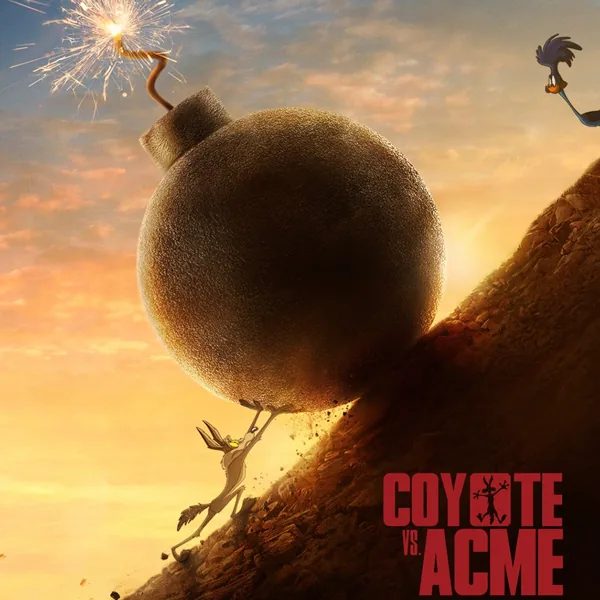
The Ultimate Legal Discovery Challenge: Lessons from Coyote vs. Acme
In the highly anticipated film Coyote vs. Acme, the world’s most resilient and unfortunate predator finally takes his grievances to court, suing the Acme Corporation for decades of defective gadgets, faulty anvils, and explosive mishaps. While the premise offers brilliant comedic potential, it also presents a fascinating hypothetical scenario for legal and corporate professionals: the sheer nightmare of discovery. If a legal team were tasked with building a case against a legacy manufacturing giant like Acme, they would need to sift through decades of product schematics, purchase orders, quality assurance reports, and liability waivers. For a company that has been operating since the mid-20th century, the bulk of those historical records wouldn’t be sitting in a cloud server, they would be locked away in physical archives, likely trapped on microfilm.
The Microfilm Bottleneck at Acme Corporation
For decades, microfilm and microfiche were the gold standard for archiving massive amounts of corporate data, saving physical space while preserving vital documents. It is easy to imagine Acme Corporation’s vast underground vaults filled with microfilm rolls detailing the blueprints of every Giant Rubber Band and Jet-Propelled Pogo Stick ever manufactured. However, when a massive class-action or high-stakes lawsuit hits, relying on mechanical microfilm readers becomes a massive liability. Physical film degrades over time, is susceptible to environmental damage, and limits access to one user at a time. Searching for a specific purchase order from 1985 requires manually spooling through thousands of frames, a process that drains thousands of billable hours and stalls critical legal momentum.
Digitization as the Legal Strategy Catalyst
The bridge between antiquated storage and modern efficiency is comprehensive microfilm digitization. If the legal teams in Coyote vs. Acme were to digitize those legacy records, the entire landscape of the trial would shift. By converting physical microfilm into high-resolution digital formats, decades of inaccessible data are suddenly brought to the surface. Advanced Optical Character Recognition (OCR) technology can be applied during the scanning process, transforming static images of old blueprints and typewritten memos into fully searchable databases. Instead of spending weeks huddling over a microfilm machine, paralegals could simply query a keyword like “Dehydrated Boulder defect” and instantly retrieve every relevant catalog entry and internal memo. Digitization allows for instant cataloging, secure sharing across global legal teams, and seamless integration into modern electronic discovery platforms.
Future-Proofing Your Legacy with Idi image
While your organization may not be facing a lawsuit from a disgruntled coyote, the risks associated with siloed, analog data are very real. Whether for legal compliance, historical preservation, or operational efficiency, leaving vital institutional knowledge trapped on decaying microfilm is a risk modern business cannot afford. At Idiimage.com, we specialize in unlocking that trapped value. By transforming cumbersome microfilm archives into accessible, secure, and searchable digital catalogs, we empower organizations to future-proof their legacy. Digitization ensures that when you need critical information, whether to defend a patent, audit past operations, or simply streamline your daily workflow, it is available at the click of a button, not hidden at the end of a spool.